
Summary: Scientific understanding, including models and theories, are contestable and are refined over time through a process of review by the scientific community.
Major Features
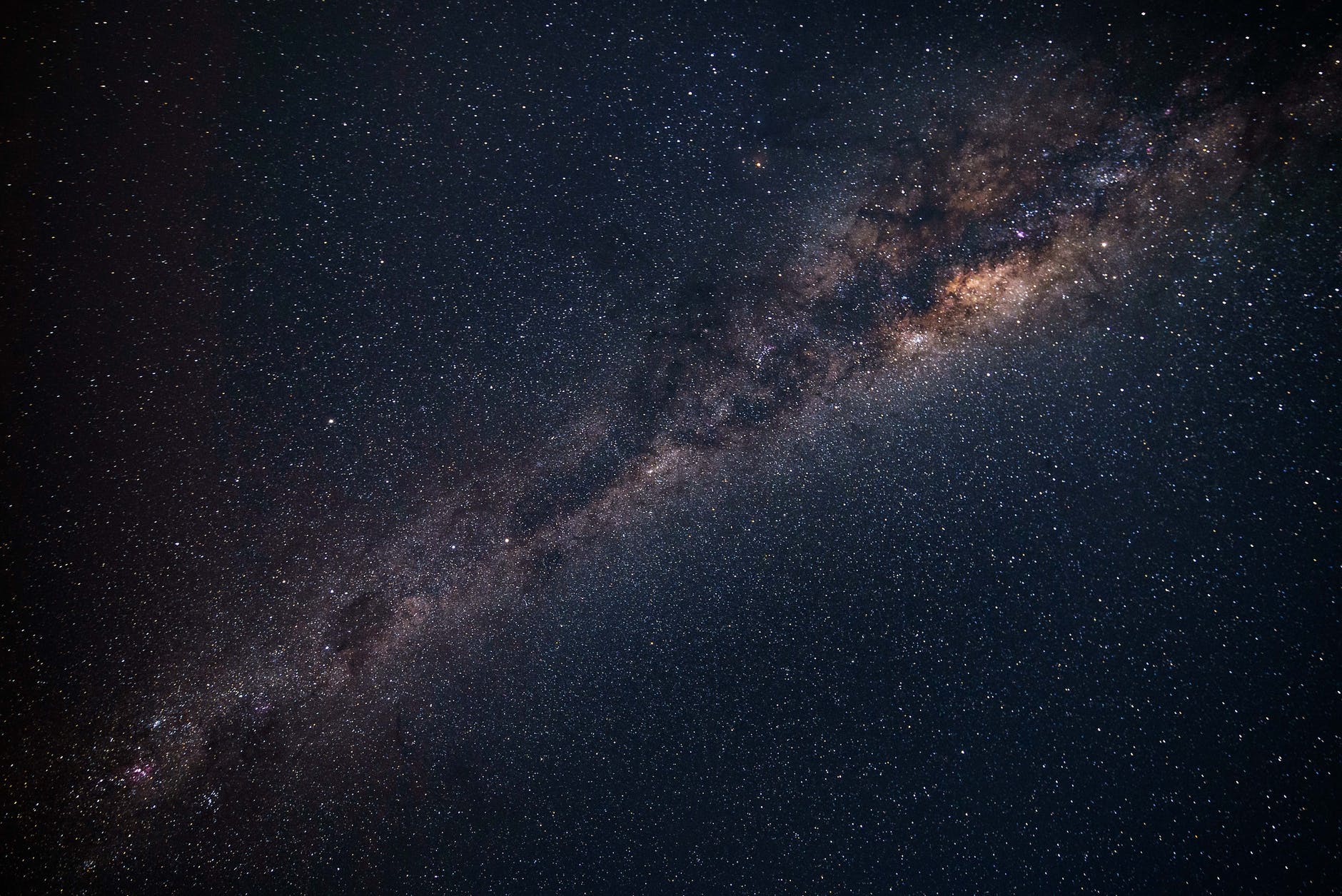
“outline some of the major features contained in the universe, including galaxies, stars, solar systems and nebulae”
Notes
| Activity/Resource | Notes |
|---|---|
| [Research] Universe Features | In groups, students research a chosen major feature of the Universe (when it was discovered, brief description, relative size/distance from Earth) Students could also research different types of galaxies (and classify the Milky Way), as well as types of stars. Consider also having students research + draw a diagram showing the structure of a star (e.g. the Sun), with appropriate labels. |
| [Video] What is the Sun made of? | The Royal Institution. (2020). What is the sun made of? – Christmas lectures with James Jackson [Video]. https://www.youtube.com/watch?v=tSAiFWtDj1Q Using flame tests (e.g. boron, lithium, barium, strontium, copper, sodium) to relate to spectroscopy/tell what’s in the Sun |
| [Video] These are the Asteroids to Worry About | Veritasium. (2020). These are the asteroids to worry about [Video]. https://www.youtube.com/watch?v=4Wrc4fHSCpw Describes the formation and detection of asteroids (animations + narration); including near Earth asteroids |
| [Research] Star Life Cycle | Students learn (or research) about the life cycle of a star, then produce a diagram or poster with descriptions of each stage |
| [Digital] Online Planetarium | The Sky Live hosts an interactive sky map students can use to locate familiar space objects (e.g. planets from the Solar System, constellations) |
Understanding about the Universe
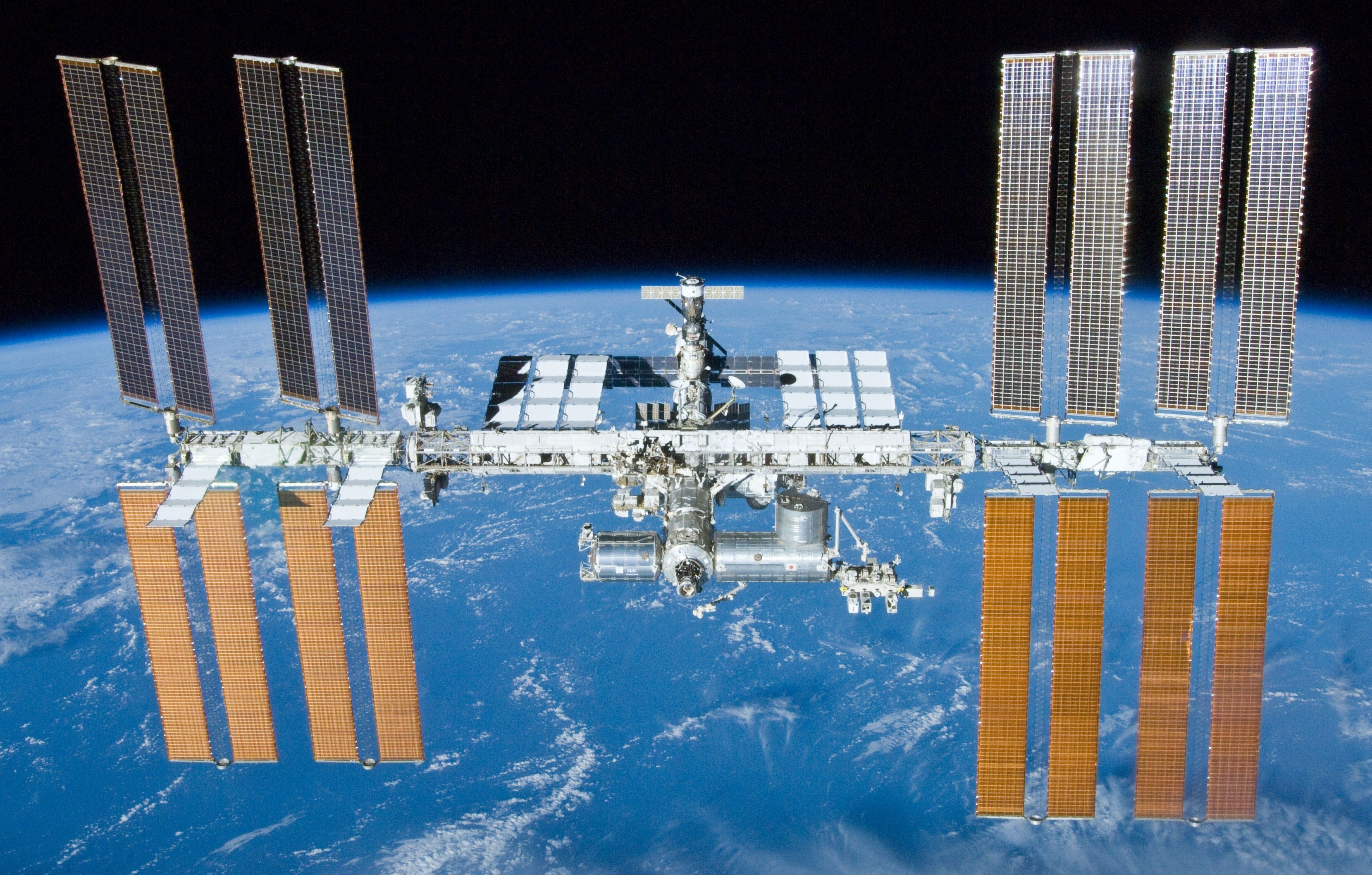
“describe, using examples, some technological developments that have advanced scientific understanding about the universe”
“use appropriate scales to describe differences in sizes of and distances between structures making up the universe”
Notes
- Astronomical System of Units – Wikipedia article
| Activity/Resource | Notes |
|---|---|
| [Research] Media Review | Students review articles or videos about the Universe in news media. In particular, students can identify recent Australian research or technological developments For reliability, students should compare media reports with websites (NASA, CSIRO, Academy of Science) |
| [Literacy] – Timeline | Students create a timeline documenting research and discoveries about the Universe Students can also include past cultural and/or religious conceptions of the Universe |
| [Video] First Image of a Black Hole | Veritasium. (2019). First image of a black hole [Video]. https://www.youtube.com/watch?v=S_GVbuddri8 Case-study: Scientists had to assemble over a petabyte of data from the Event Horizon Telescope over a couple years in order to produce the first image of a black hole (M87, supermassive) Related article from National Geographic |
| [Video] Half the Universe was Missing | Veritasium. (2020). Half the universe was missing… until now [Video]. https://www.youtube.com/watch?v=Kp_kqamkYpw Could be ideal for class interested in astronomy (but outside the scope of Year 10, mostly advanced content) |
| [Video] Square Kilometre Array (SKA) | ABC Catalyst. (2011). Square Kilometre Array (SKA), 2011 [Video]. https://education.abc.net.au/home#!/media/106520/ ABC Behind the News. (2009). The biggest radio telescope in the world [Video]. https://education.abc.net.au/home#!/media/103308/ Related: https://www.skatelescope.org/ Note: still awaiting construction (plenty of future jobs available for students interested in astronomy), but can look at the key projects it’s intended to undertake |
| [Research] Astronomical Units | Simple task – students research what units are used to make astronomical measurements (primarily time and distance) A basic summary of what a light-year is can be found on this NASA website Additionally – students can find examples of where astronomical units have been used in popular media |
| [Digital] Spreadsheet | On a class-wise spreadsheet, students catalogue their recordings of space objects’ size/distance from Earth (in table form – can later convert into a graph assuming the same units are used) This could include distances from Earth to other planets, the Sun or other stars, different galaxies, etc. |
| [Numeracy] How Big? | With research, students record how big the following are: the Moon and Earth, Jupiter (and other planets in the Solar System), the Sun, the Milky Way, the Observable Universe etc. (Note: care needs to be taken to use comparable units – it may be more convenient to discuss objects like the Milky Way separate to more local objects) Additionally – students can develop ways of describing the relative size of these objects (e.g. the Sun can fit about one million Earths) |
| [Discussion] Models | Students consider the benefits and limitations of scientific models to describe scientific theories and scenarios E.g. (Expanding) Balloon Analogy (for the Universe) |
| [Practical] Scale Model | Students create an accurate scale model of the Solar System. Guides can be found online, e.g. from the Lunar and Planetary Institute. You can begin this activity by first targeting students’ misconceptions about the scale of the Solar System (e.g. by showing students common pictures or diagrams of the Solar System that show the planets relatively close to one another). |
| [Digital] What Did Hubble See on Your Birthday? | Simple online tool for viewing images taken by the Hubble Space Telescope on a particular day |
| [Digital] Satellites and Space Junk | Stuffin.space hosts a real-time 3D map of objects in space orbiting Earth (satellites, rocket bodies, and debris) The ESRI hosts a similar live map of satellites and space junk in Earth’s orbit, with additional filtering options (e.g. country of origin, type, launch date) Links can be made to films like WALL-E and Gravity, as well as Kessler Syndrome |
| [Research] Satellites | Students select and research a particular satellite, including details about its mission and findings Examples: Hubble, SOHO, Chandra, Astrosat, Herschel, Swift, ISO |
| [Project] Space Travel | In groups, students select a destination (e.g. Mars, or a long-distance journey like to the nearest star, Proxima Centauri) and devise a plan for sending a group of astronauts there This plan could include: the time it will take; how they will get there (e.g. type of rocket/spacecraft, trajectory); what cargo the astronauts will be travelling with and why; risks to the astronauts |
Gravity
“identify that all objects exert a force of gravity on all other objects in the universe”

Notes
- For Stage 5, it’s (probably) fine to simplify gravity as a ‘force’, following Newton’s Law of Universal Gravitation. It approximates the effects of gravity well (mostly) and remains widely used (but it does have its limitations). If students are interested, it may be worth briefly discussing Einstein’s General Theory of Relativity and spacetime curvature.
| Activity/Resource | Notes |
|---|---|
| [Numeracy] Weight | Students compare the weight of different objects on the Earth, Moon, and other planets in the Solar System (not to be confused with mass – need to show students how to calculate weight using a body’s gravitational acceleration) |
| [Research] Weightlessness | Students research how astronauts prepare for zero gravity/weightlessness, as well as the risks involved with long-term exposure to zero gravity (e.g. bone loss) This activity can also be an opportunity to learn what scientists (e.g. in the ISS) have learnt about living in space, as well as through research |
Big Bang Theory
“use scientific evidence to outline how the Big Bang theory can be used to explain the origin of the universe and its age”
“outline how scientific thinking about the origin of the universe is refined over time through a process of review by the scientific community”
Notes
- Alternative models or hypotheses about the origins of the universe (e.g. the rejected steady-state model, multiverse, cyclic model, simulation hypothesis) could be explored and compared to the Big Bang Theory (particularly in terms of whether they are supported or not by currently available evidence)
- The chronology of the universe, from the first picosecond of cosmic time to today, would need to be compressed and simplified for Stage 5 students, but it does provide a useful reference for discussing, e.g. the cosmic microwave background, the baryon asymmetry problem (unsolved), the formation of stars and galaxies, and the expansion of space due to dark energy
- Given additional time, attention can also be directed at predictions about the ‘end’ of the universe, e.g. Big Crunch, Big Chill (also known as Heat Death), Big Rip, Big Bounce, and Big Slurp
| Activity/Resource | Notes |
|---|---|
| [Research] Timeline | Students research how our cultural and scientific understanding of the origin of the universe has updated over time (through observations, new evidence and review) Alternative: in pairs, students research a particular culture’s beliefs about the origin of the universe, then present their findings (as a summary) during class discussion |
| [Literacy] Brainstorm | Main Prompt: ‘The Beginning’ What do students understand or think about when they consider the main prompt? Students may have some preconceptions about the Big Bang Theory, but they may also bring up cultural, religious or philosophical ideas about the origin of the universe. Take the time to explore some of these. Additional prompts could include: Where do we/everything come from? What is our history? |
| [Discussion] Doppler Effect | Videos about the Doppler Effect can be readily found online, e.g. this car horn example by hherhold, this racing example from Bo Manton, and this short explanation by Alt Shift X. Consider also utilising the animations available on the Wikipedia article about the Doppler Effect (or alternatively, have students find and summarise such animations). Further discussion or research can be directed towards applications of the Doppler Effect, e.g. in astronomy (one of three main causes of redshift), radar and satellites |
| [Research] Electromagnetic Spectrum | Students identify and explain what the electromagnetic spectrum is, as well as explain which parts of it are used by astronomers to study the Universe (with examples provided) Alternatively, this activity can be split into groups, with each group studying how astronomers study the Universe using a specific portion of the EM spectrum (then present their findings to the class). A summary of this topic can be found on NASA’s website. Cool Cosmos (Caltech) provides an infrared-specific perspective. |
*Will continue adding/refining ideas here over time.
 STEM Vault